Get a production ready website with Drupal Forge
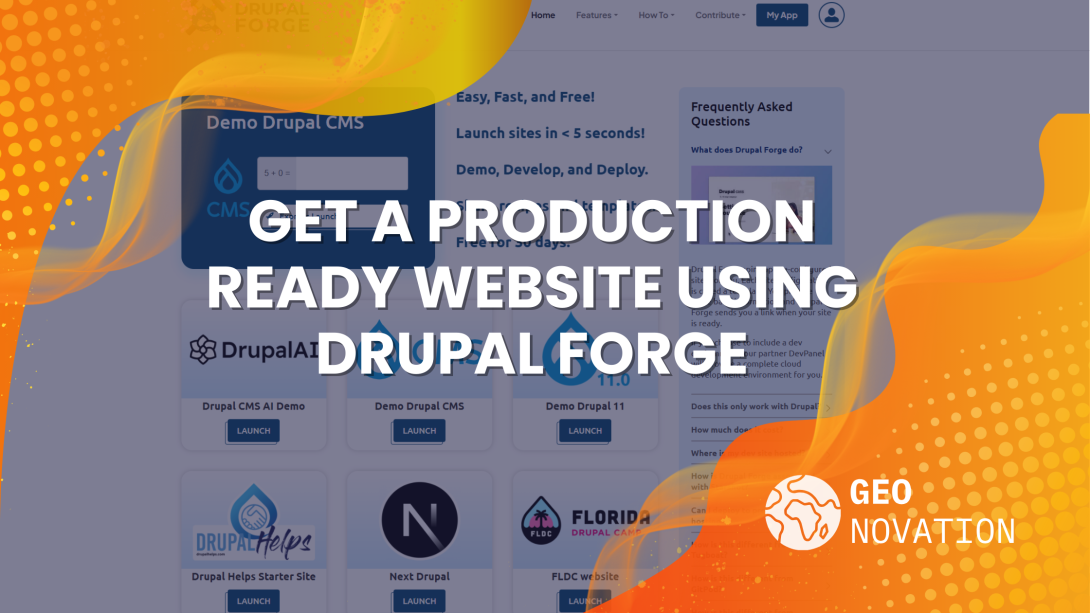
Drupal Forge is a community-driven marketplace and infrastructure platform: it provides instant, one-click demo environments and seamless site launching, directly impacting the accessibility of enterprise content management for B2B clients and development agencies.
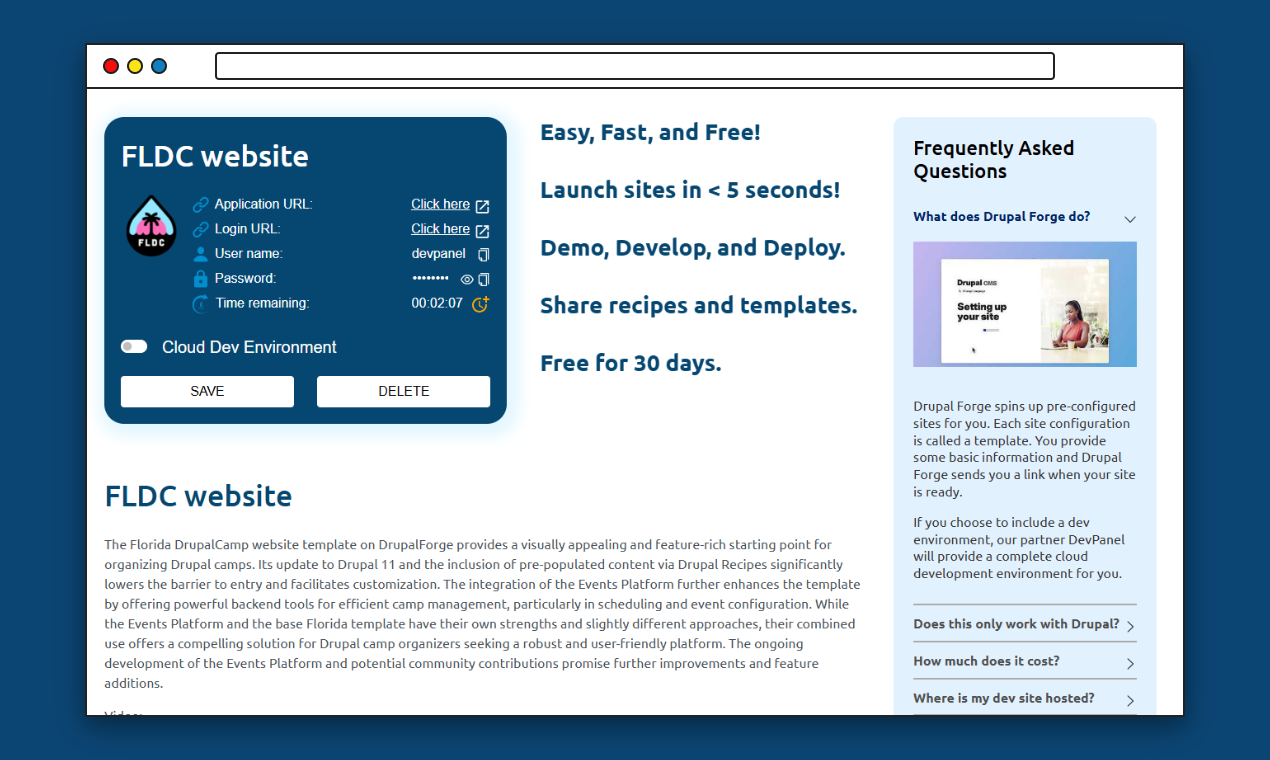
A real-world use case is the Florida Drupal Camp, which enables you to have a production-ready website to promote your local camp.
In this model, Drupal Forge fosters monetization for developers and vendors (enabling sales of apps, recipes, or hosting packages), while supporting open, sustainable contribution and broad community collaboration.
This infrastructure supports the European market’s increasing focus on digital transformation, lowering technical and transactional barriers for new players and established firms alike.
This prioritization aligns closely with Drupal Forge’s strategic value proposition and supports Geonovation’s commitment to delivering personalized, quality-driven service.
Drupal Forge is a commercial catalyst for B2B collaboration.
Drupal Forge’s marketplace model integrates instant, scalable site deployment with a unified revenue-sharing ecosystem. For Geonovation, this translates into an environment where customized, ready-made apps and Drupal distributions (such as the “Starshot initiative Drupal CMS”) can be demoed instantly, converted to production, and managed efficiently. By contributing their own “recipes” and site templates to Drupal Forge, European agencies like Geonovation benefit from greater visibility and expedited project onboarding—key for competitive advantage in B2B procurement cycles.
Secure and Supercharge Your Drupal Website
Download our free expert guide to boost performance, eliminate vulnerabilities, and protect your data.
Download the White PaperThe single greatest value proposition of Drupal Forge is its appeal across stakeholder segments. For developers, the platform opens direct monetization channels for apps, recipes, and site templates, complete with automated revenue sharing and instant exposure to a global audience. For trainers and educators, it offers a reproducible environment for customized workshops or “sandbox” learning, enhancing client skill acquisition and post-deployment cohesion.
How Drupal supports sustainable contributions
Many promising Drupal projects remain outdated because maintainers lack funding, unlike in WordPress where paid plugins drive sustainability.
But while WordPress fosters a sales-driven culture, Drupal values shared software and service-based business models, leaving developers reliant on client billing or sponsorship.
Drupal Forge proposes a shift: instead of selling one-off custom sites, developers can sell ready-made sites to many clients. This model aligns with Drupal’s collaborative culture, while allowing maintainers to earn revenue, reduce dependence on billable hours, and dedicate more time to keeping projects updated and thriving.
The risk of Drupal Forge
The main risk of a “Drupal Forge” model is that it tries to replicate WordPress-style plugin monetization in a fundamentally different ecosystem.
Drupal’s community expects contributed modules to remain free, and paywalls around functionality could trigger resistance or low adoption.
The GPL license also prevents code from being locked down, limiting direct sales of modules. Unlike WordPress’s massive base of small businesses, Drupal is driven by enterprises and public institutions that prefer to pay for long-term support, consulting, and SaaS integrations rather than per-plugin fees.
As a result, a marketplace approach risks misalignment with user expectations and community values. Sustainable monetization in Drupal typically comes from enterprise services, vetted security, and tailored distributions, meaning that any Forge-like initiative would need to focus on these paths rather than relying on one-off plugin sales.
How to contribute to Drupal Forge
In Drupal Forge, contributions would go beyond simply selling plugins and instead focus on enterprise-aligned value.
Developers and agencies could contribute by publishing open-source modules, building vertical distributions, or releasing integrations with SaaS platforms, while monetizing through premium support, maintenance subscriptions, or access to hosted services.
Forge could also serve as a trusted marketplace for enterprises by vetting modules for security and quality, giving contributors greater visibility and credibility.
For agencies, this creates revenue opportunities not only from support contracts and guaranteed updates but also from showcasing their expertise, attracting new clients, and upselling custom development or hosting services built around their Forge contributions.
Useful Links
- https://www.drupal.org/project/drupalforge
- https://github.com/drupalforge/starter_template ( Starting theme to build Drupal Forge websites )
- https://www.drupalforge.org/